


discover

The Outdoor Grounds

THE PARK AND ITS TOPIARIES

The overall layout and design of the park were conceived in the early 20th century by renowned landscape architect Achille Duchêne, “The Prince of Gardeners, The Gardener of Princes.”

The favored landscape architect of high society, Duchêne left his mark by designing the most exquisite gardens of his time. The grounds subsequently evolved under other landscape architects who further developed the topiary art. The flower gardens were created starting in 2022.

Topiary Art

Topiary Art

Topiary art dates back to ancient times. The Romans, masterful gardeners of antiquity, had already mastered the art of landscaping. During the Middle Ages, this craft survived only within monastery cloisters. It was not until the Renaissance that topiary made its grand return to parks and gardens across Italy, France, England, and Scotland. Boxwood topiary became the defining hallmark of French formal gardens (jardins à la française), notably those designed by André Le Nôtre at the Château de Versailles and Vaux-le-Vicomte.
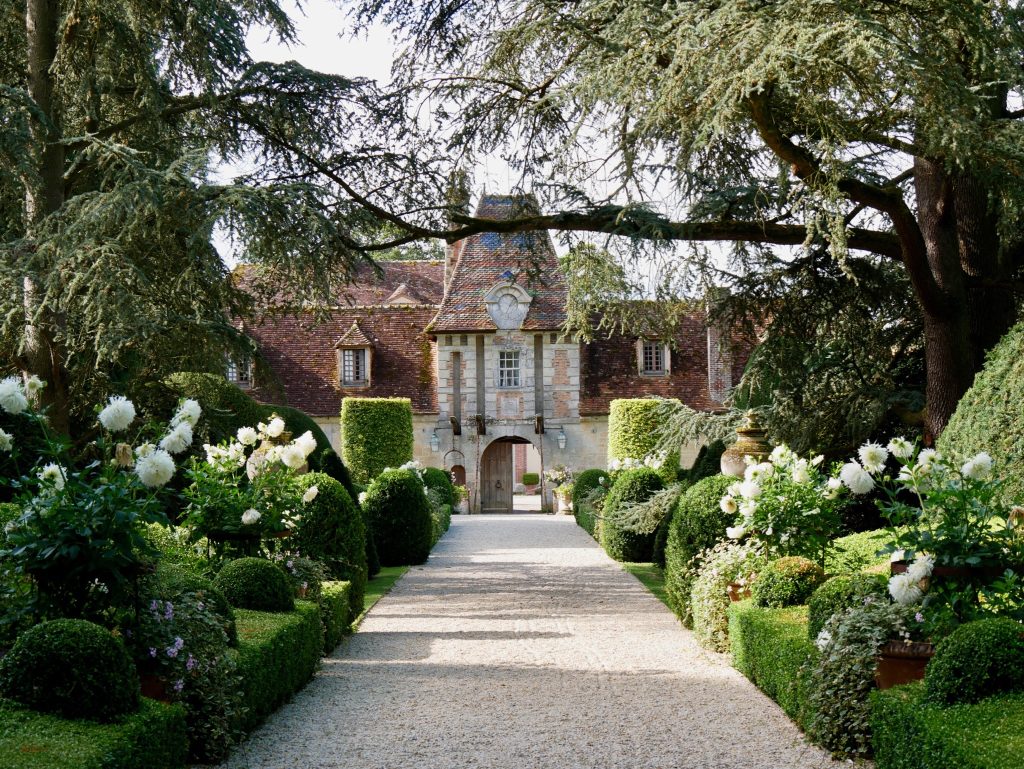
The Cedar Avenue

The Cedar Avenue

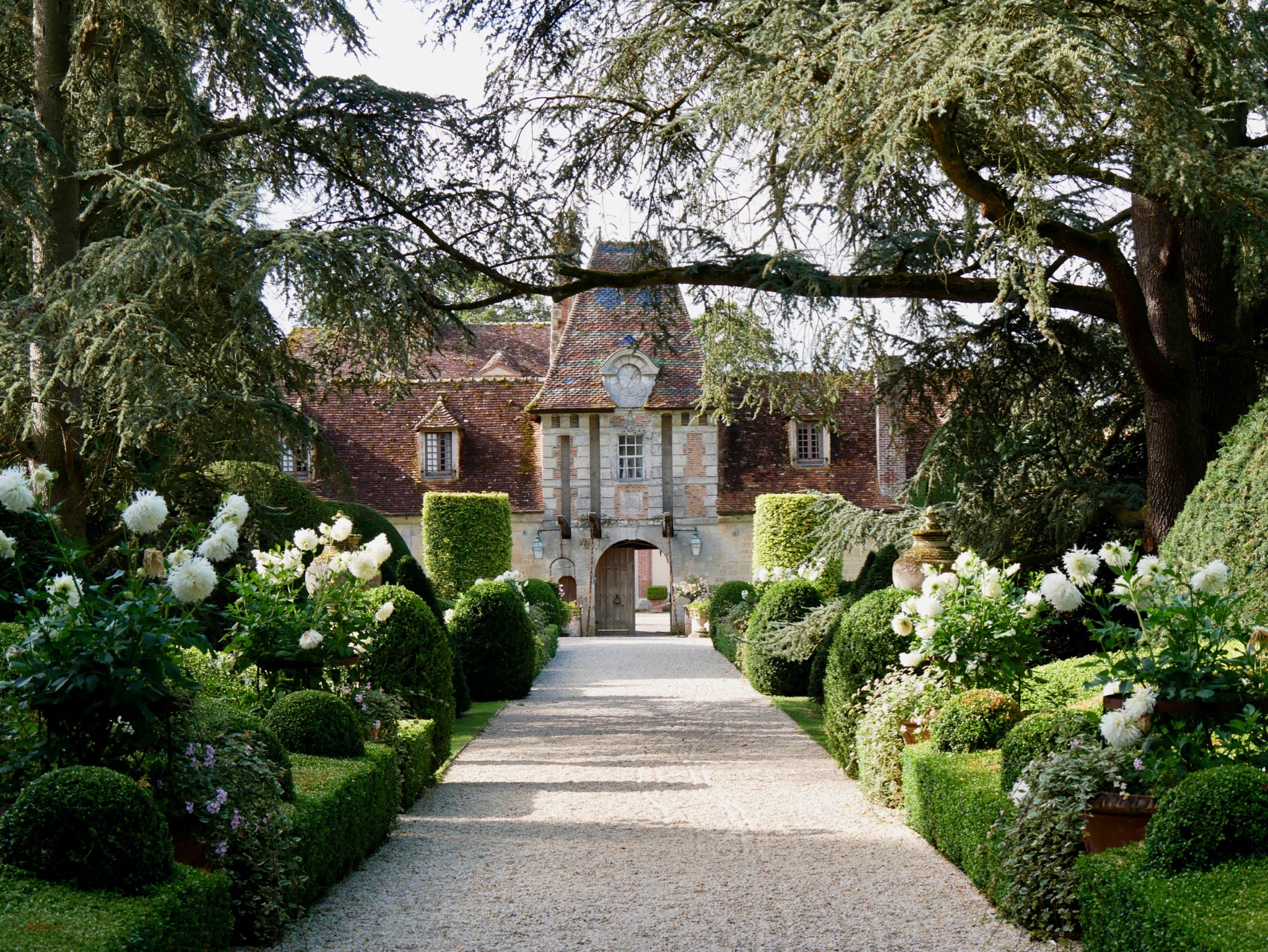
Flanked by majestic centuries-old cedars, boxwood benches, and towering yew topiaries, this stately avenue forms a breathtaking perspective leading toward the ancient postern gate and its drawbridge. It runs along the Peacock Garden, renowned for its mushroom-shaped topiaries and charming garden pavilion, which once sheltered peacocks.
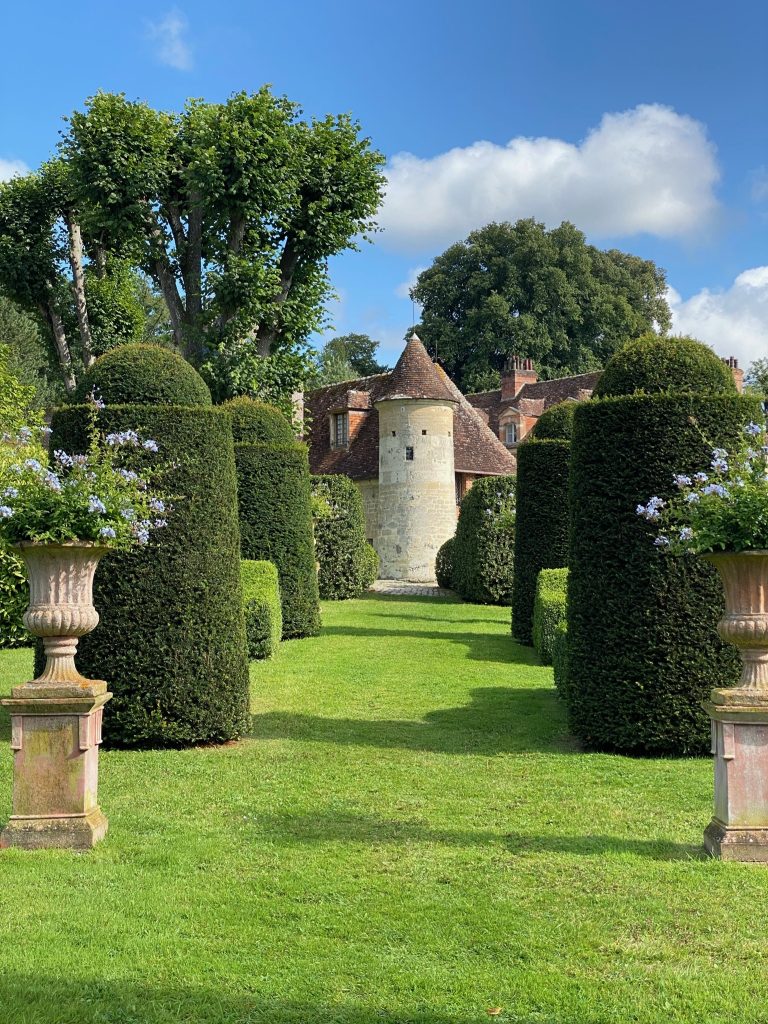
The Viewpoint Cone

The Viewpoint Cone

As you stroll down this avenue bordered by boxwood benches, yew cylinders crowned with demi-spheres, and terracotta Medici urns, your gaze is drawn naturally toward one of the château's four corner turrets. The artistry of topiary is revealed here through the precise pruning and sculpting of greenery, crafted to focus one's visual perception on the landscape's most striking architectural features.
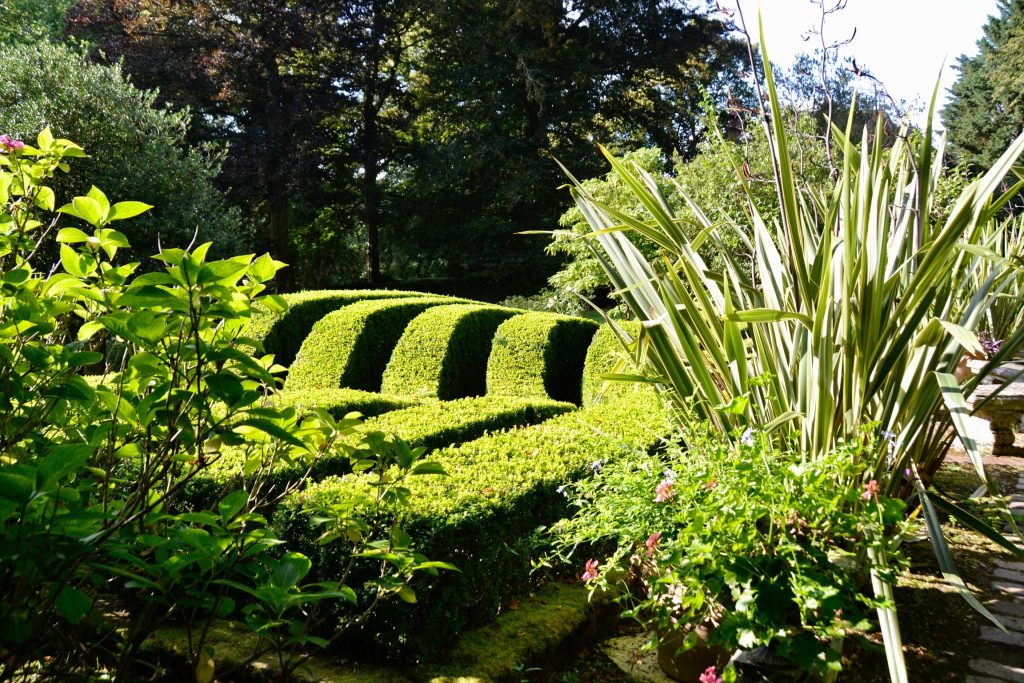
The Boxwood Waves

The Boxwood Waves

Topiary—the craft of training and shearing trees and shrubs into defined shapes—is directly inspired by the grand French formal gardens and can be discovered throughout our grounds. Here, the boxwoods are trimmed into rolling waves to produce informal topiaries, offering a more relaxed, contemporary approach to sculpted hedges and plant architecture. These organic silhouettes, with their soft waves, rounded edges, flowing curves, and tiered volumes, form an enchanting type of living abstract sculpture.
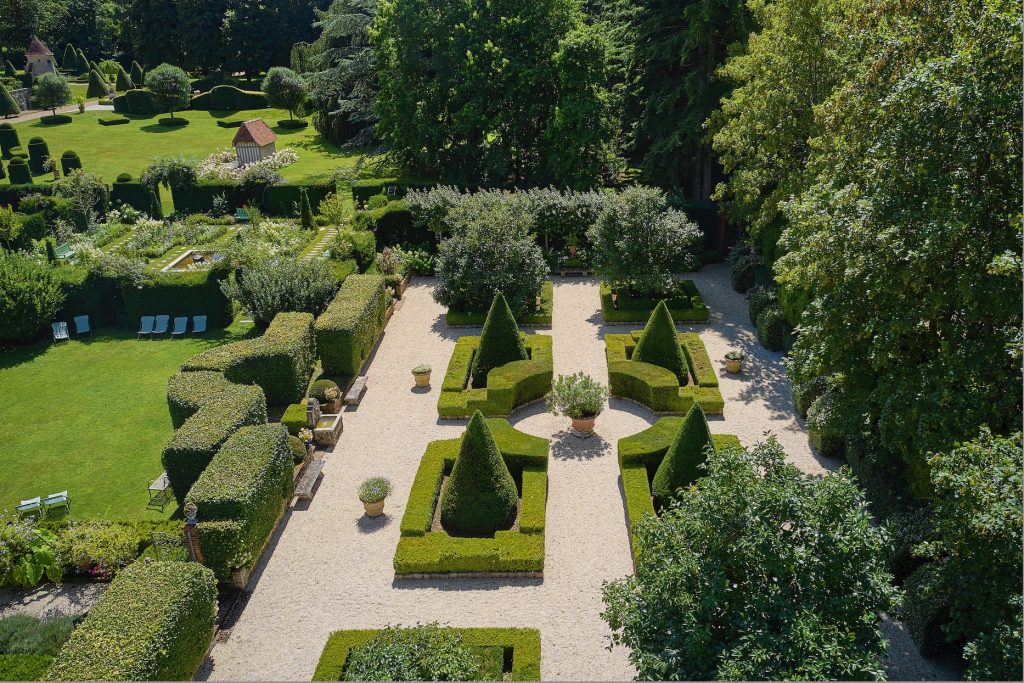
The Italian Garden

The Italian Garden

With its sculpted boxwoods, fountains, cascades of blooms, terracotta planters, stone benches, and white statuary, it captures the romantic elegance of Renaissance gardens and grand Italian villas.
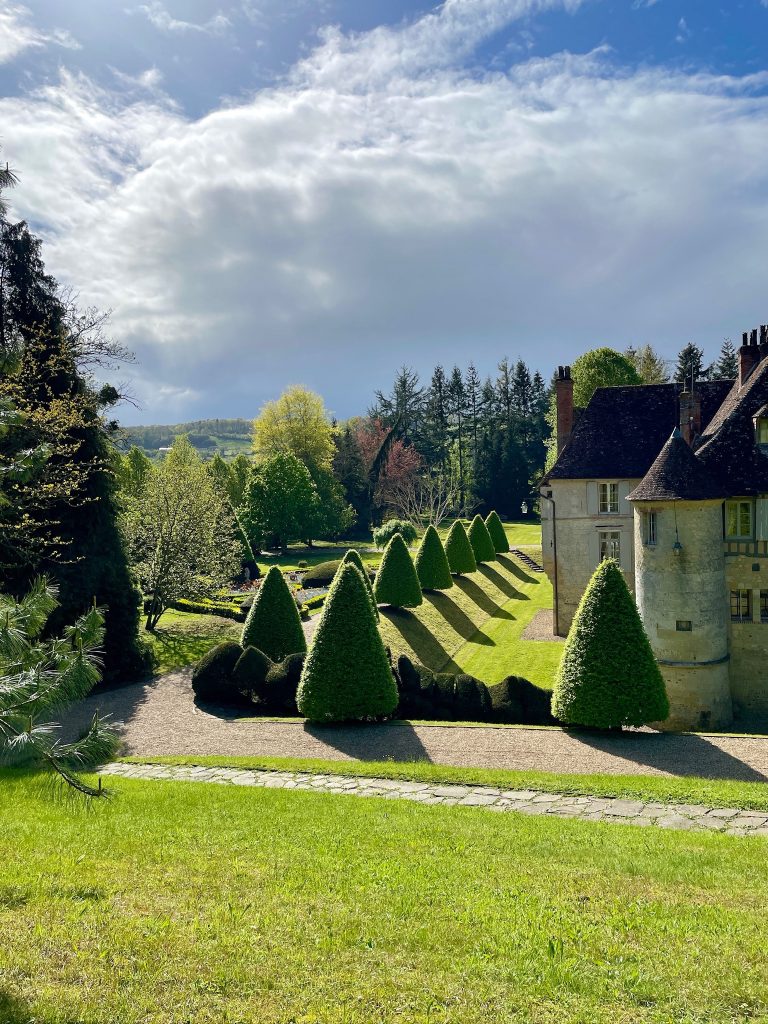
The Hornbeam Cones

The Hornbeam Cones

All around the château, the moats are punctuated with hornbeam cones that create a distinctive, captivating perspective.
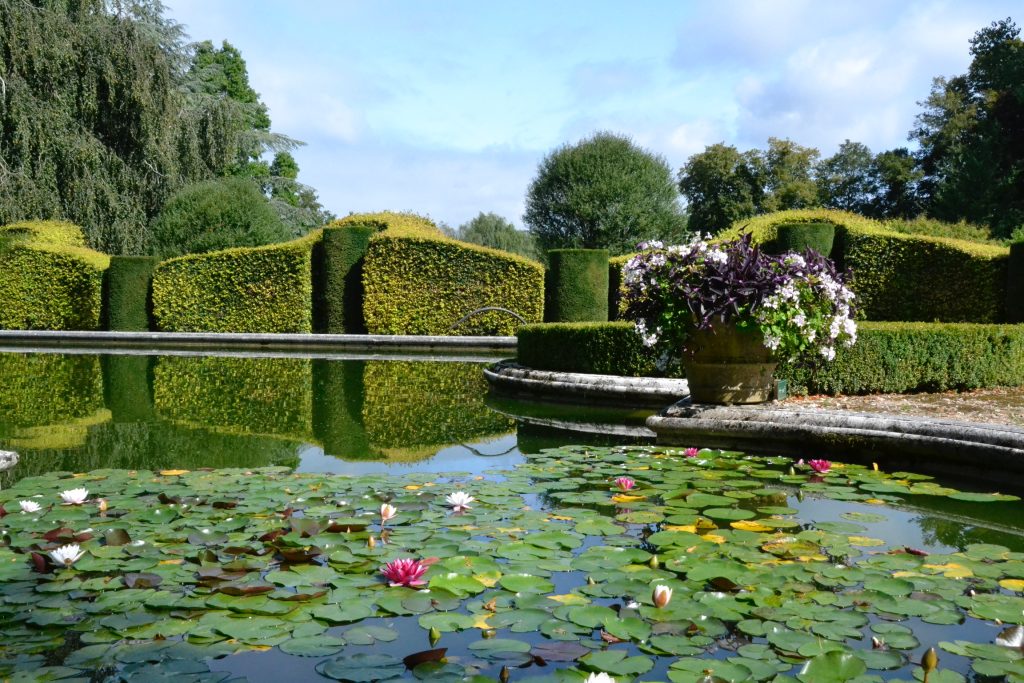
THE REFLECTING POOL

THE REFLECTING POOL

Framed by overhanging beeches and columns of yew sculpted in a Florentine motif, it mirrors the stately grandeur of the château.
THE FLOWER GARDENS


Inspired by the philosophy of renowned English landscape designer Russell Page, the new owners sought to balance the architectural rigor of formal topiary with the lush exuberance and freedom of mixed borders.

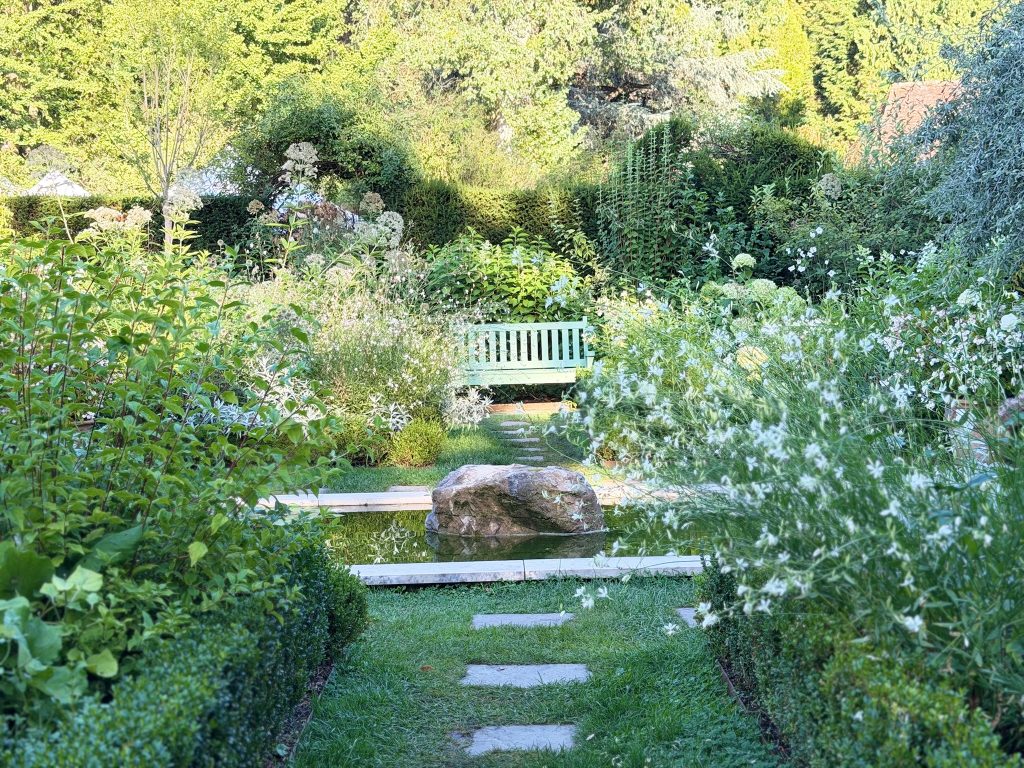
THE WHITE GARDEN

THE WHITE GARDEN

Inspired by the famous White Garden at Sissinghurst Castle in Kent, it showcases a harmonious symphony of white blooms and foliage of varied heights set against a lush green backdrop, encircling its central basin.
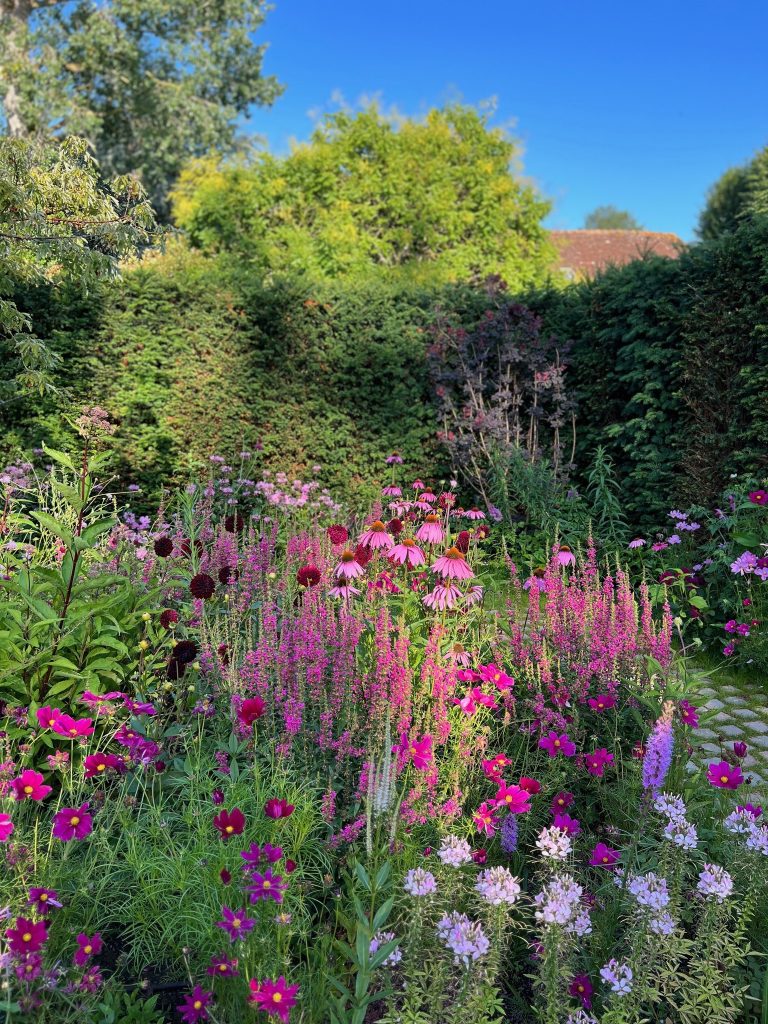
THE PURPLE GARDEN

THE PURPLE GARDEN

Ranging from the deep black of ophiopogon to the rich wine, cherry,
crimson, and blush tones of masterworts, pincushion flowers, penstemons, and coneflowers, this garden
reveals a rich, nuanced palette. Its colors shift
subtly with the changing light and seasons.
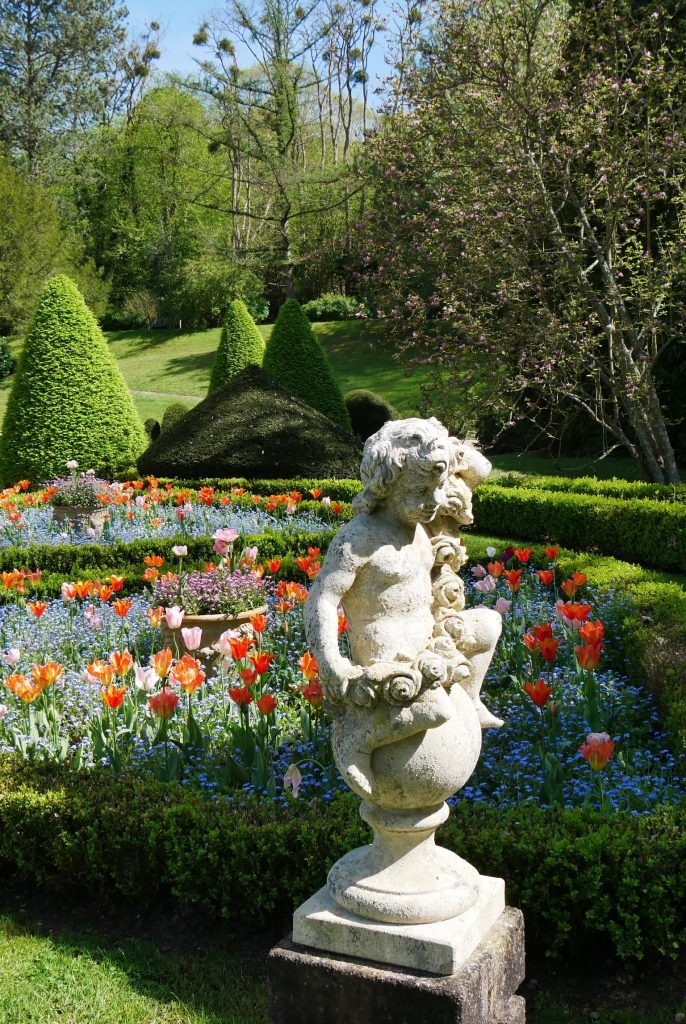
THE GARDEN OF LOVE

THE GARDEN OF LOVE

Nestled south of the château, this enchanting garden features delicate floral parterres inviting visitors to pause and savor the moment on the bench set before the sculpture of a cherub of love.
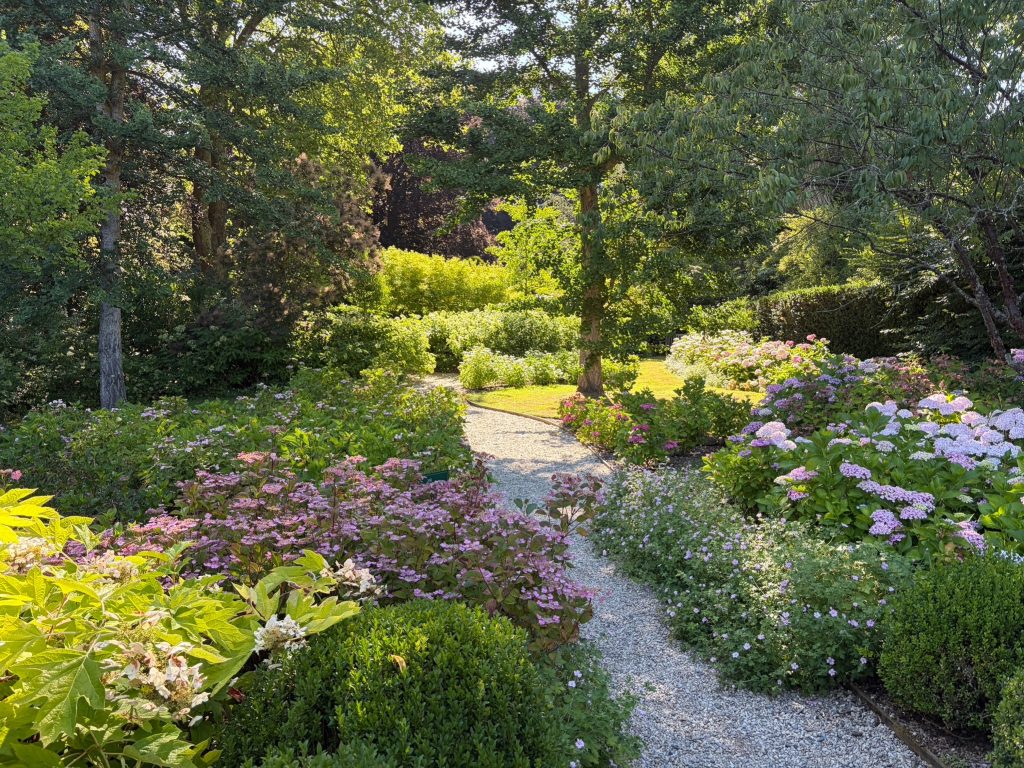
THE GINKGO GARDEN

THE GINKGO GARDEN

In the dappled shade of five ginkgo biloba trees, a remarkable collection of hydrangeas flourishes.
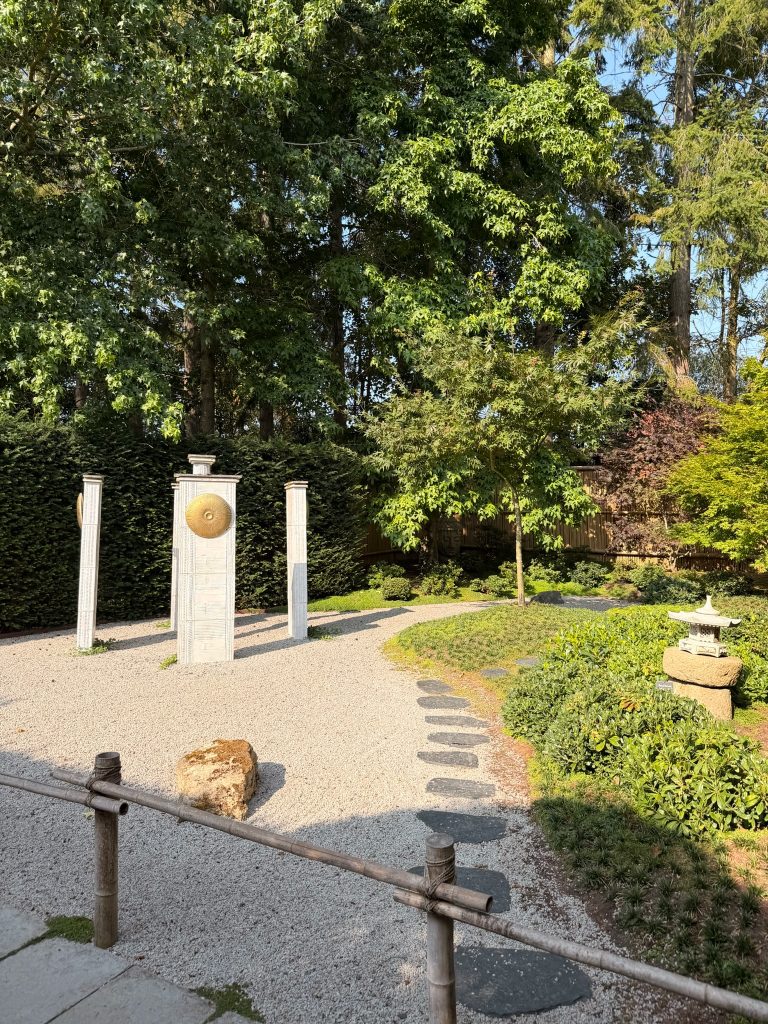
THE ZEN GARDEN

THE ZEN GARDEN

Japanese-inspired, it is home to a collection of azaleas and cloud-pruned pittosporum globes, alongside a sculpture by Stanislas Jean-Georges dedicated to "the sun" facing Japanese maples (Acer palmatum). The ground is carpeted with a lush bed of ophiopogon and mind-your-own-business (Soleirolia).
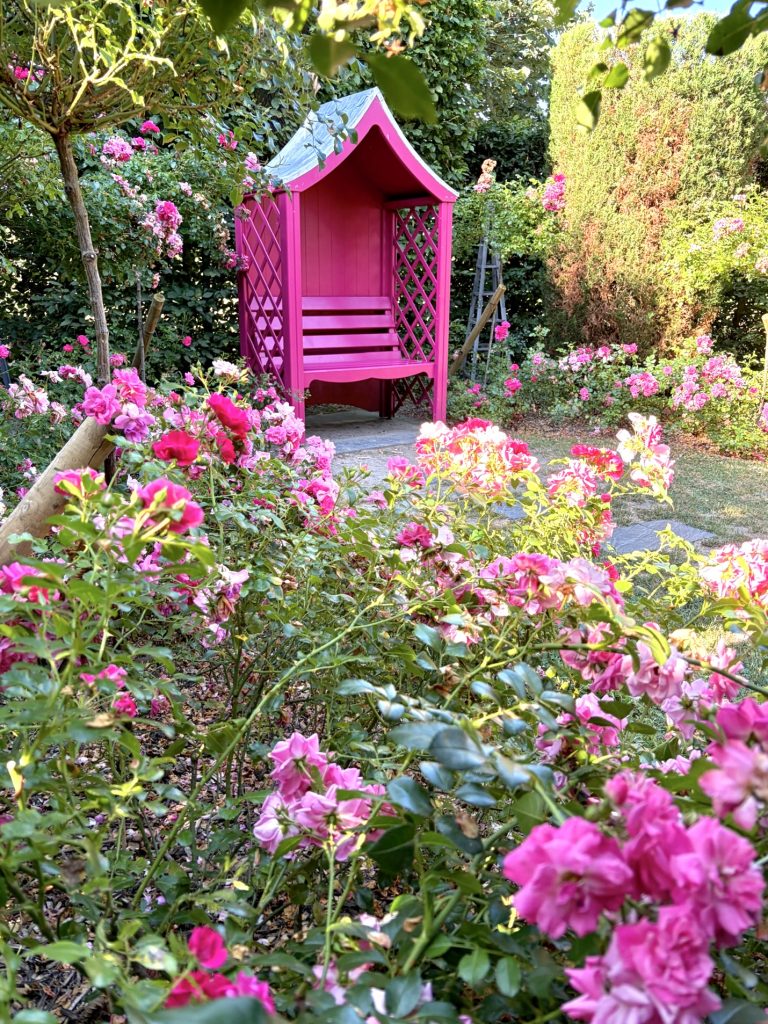
THE ROSE BENCH

THE ROSE BENCH

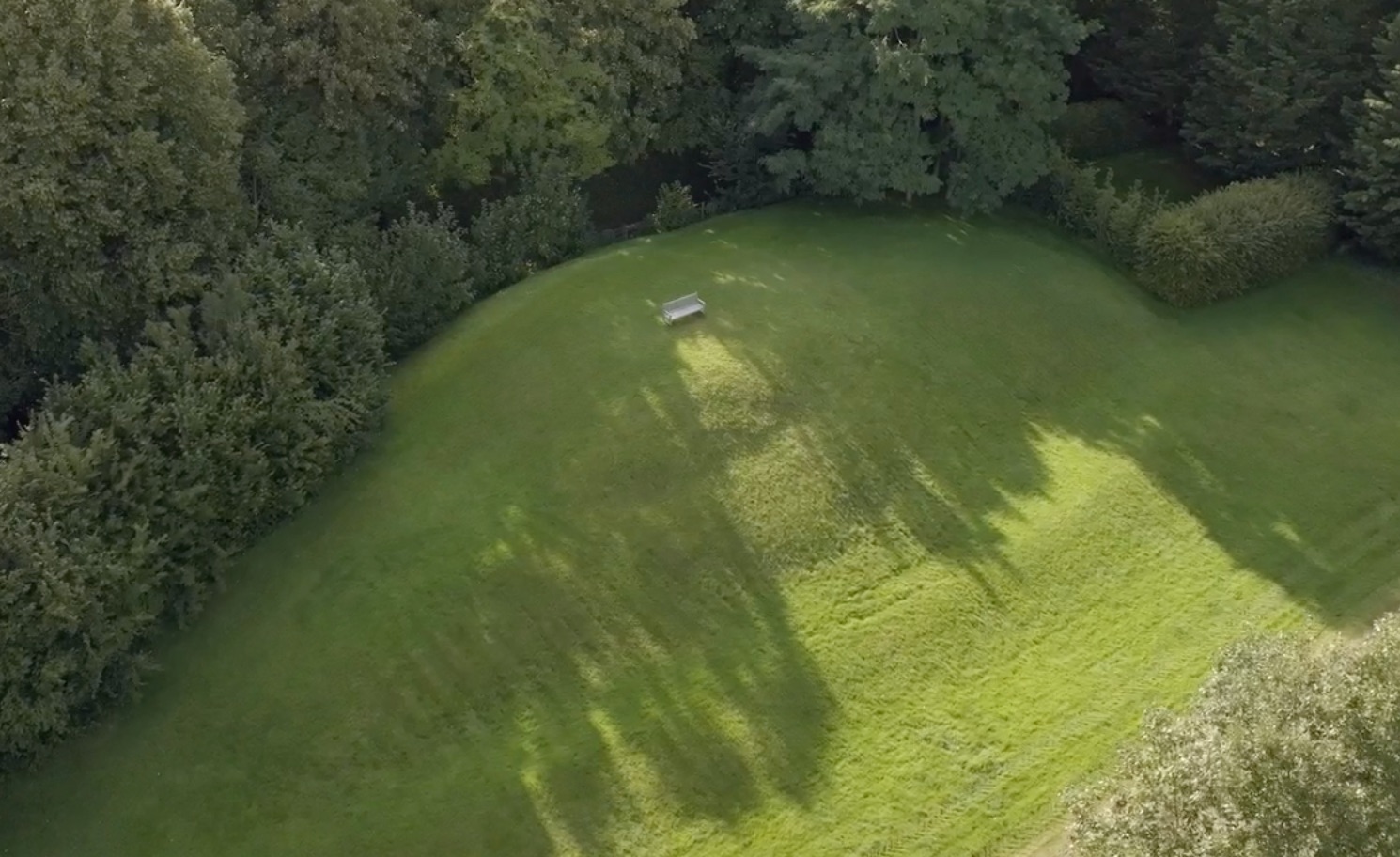
At the far end of the Flowering Crabapple Avenue, a charming bench is nestled among rosebushes, whose blossoms unfurl continuously from May through September.
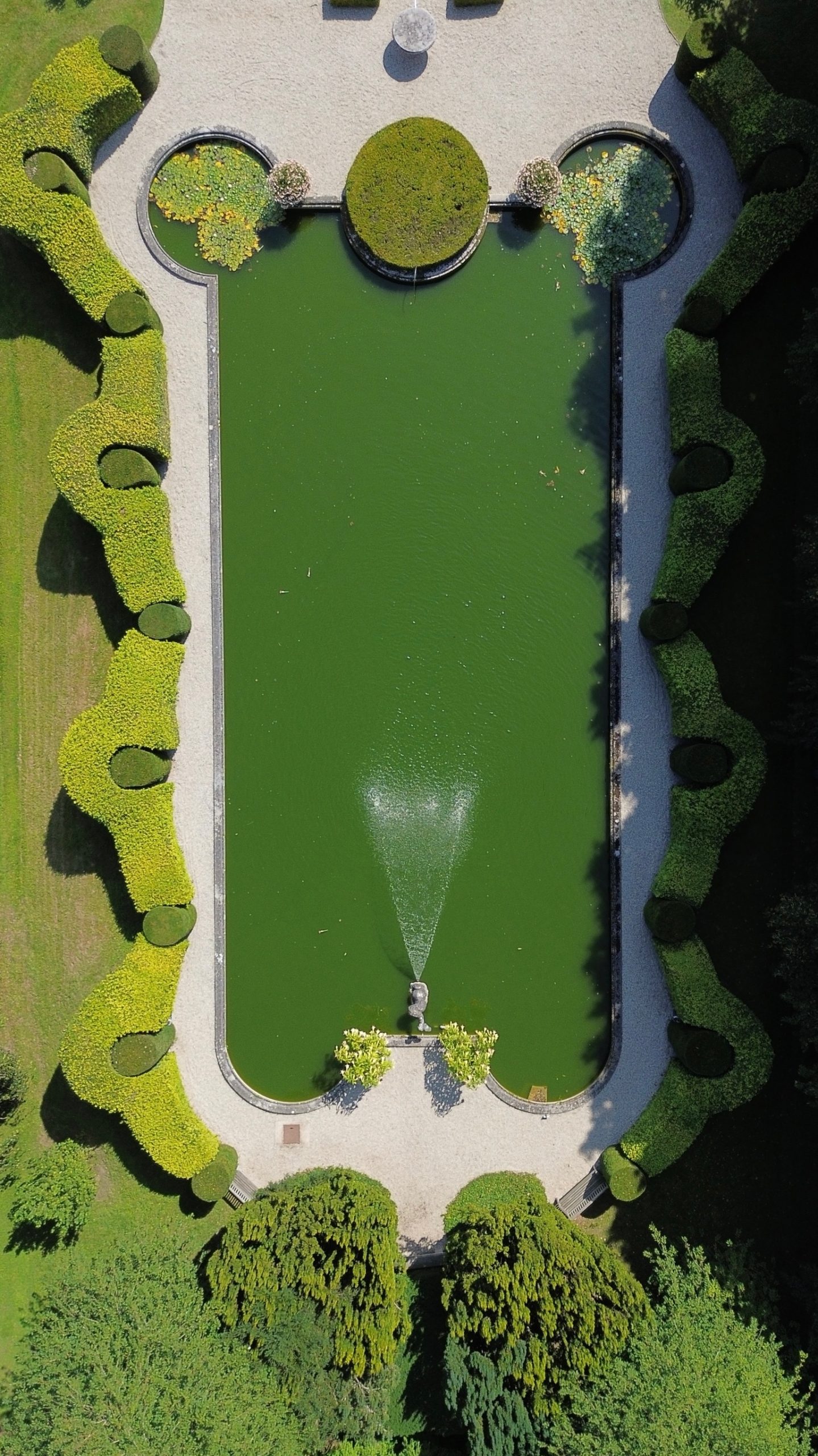
The Reflecting Pool FROM ABOVE*

The reflecting pool, designed by celebrated landscape architect Achille Duchêne in 1928, forms the centerpiece of the park. The verdant borders, rounded columns, and boxwoods pruned into spheres and divans were designed by Georges Hayat to frame and enhance the park’s avenues and vistas. Today, it features a majestic fountain, water lilies, frogs, and large koi carp.

* The reflecting pool is very deep: please supervise children closely, especially when feeding the large koi carp in the basin.

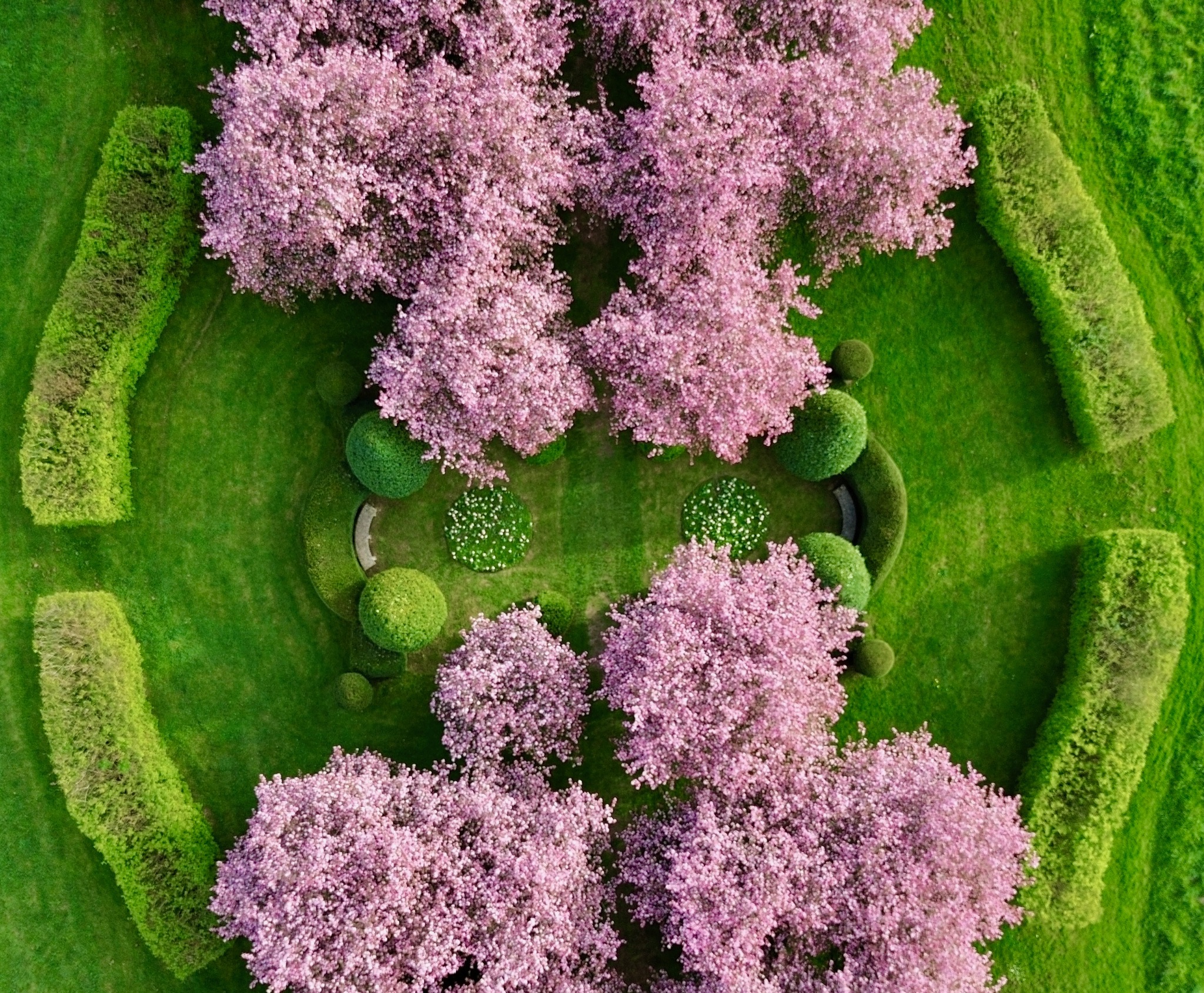
The Flowering Crabapple Avenue FROM ABOVE

This avenue, nestled between two meadows, is exceptionally splendid in spring, especially during April when the crabapple trees burst into vibrant pink blossoms. It gracefully leads to the rose bench, a delightful sheltered seat surrounded by an abundance of fragrant roses. An enchanting retreat where you can sit and immerse yourself in the surrounding floral beauty.

THE "JARDIN REMARQUABLE" LABEL

Established in 2004, this official distinction awarded by the French Ministry of Culture honors public and private parks and gardens of outstanding cultural, aesthetic, historical, or botanical interest.

THE EBTS AWARD

Château de Boutemont was crowned “Most Beautiful Garden in Europe” in 2016. The European Boxwood and Topiary Society (EBTS) awarded it the prestigious Grand Prix for the Most Beautiful Garden in Europe.

Estate History

1,000 Years of History

The history of Château de Boutemont and its lords dates back to the year 1000, with the construction of a double feudal motte, enclosed by a palisade and crowned by a wooden keep, designed to oversee the lower Touques valley and the ancient Roman road connecting Lisieux to the sea.

The motte served as a rudimentary military fortification, and the Lord of Boutemont soon had a manorial residence built nearby: a compact fortress with a principal dwelling encircled by a water-filled moat. Access to the square courtyard was via a small drawbridge, which formed the foundation of the current château.

Boutemont was an important fiefdom extending as far as Tourgéville and Pennedepie, held by a knight under the authority of the Barony of Fauguernon. In 1096, the Lord of Boutemont embarked on the First Crusade alongside Robert Curthose, Duke of Normandy and eldest son of William the Conqueror, an expedition that culminated in the capture of Jerusalem in July 1099.

Archives from the 11th century mention a Lord of Boutemont in the service of Henry II, Duke of Normandy and King of England, followed by Hugues de Boutemont in 1180 and Guillaume de Boutemont in 1195. In 1204, Normandy, which had been English for 138 years, was annexed to France by King Philip Augustus, and the Norman nobility submitted to the Crown. The Boutemont family held the estate until the Hundred Years’ War.

The last knight of Boutemont perished at the Battle of Agincourt on October 25, 1415, while fighting alongside King Henry V.

Starting in 1405, distinguished local noble families succeeded one another: the Servains, the Borels, and then the Paisants in 1538. It was Philippe Paisant and his descendants who carried out the primary transformation of the château, creating a grand stone manor, four corner towers, the entrance postern gate, and surrounding buildings constructed during the reign of Henry IV.

Later, the Le Bas family took ownership of Boutemont in 1697 during the reign of Louis XIV and continued renovations, most notably adding the stone and brick façade to the residence and opening the perimeter walls to embrace views of the valley. Their descendant, David Gabriel Antoine Gueroult, was the final Lord of Boutemont under Louis XVI until the French Revolution. Following his emigration to England, the château was confiscated and sold as national property (“bien national”) to the Bouteiller family.

Boutemont gradually fell into neglect until it was purchased in 1915 by the Drouilly family, who oversaw extensive restorations, reshaped the park, and commissioned the reflecting pool from Achille Duchêne, the celebrated landscape designer who also worked on the historic gardens of Blenheim Palace and Vaux-le-Vicomte. In 1927, the château was listed as a Historic Monument.

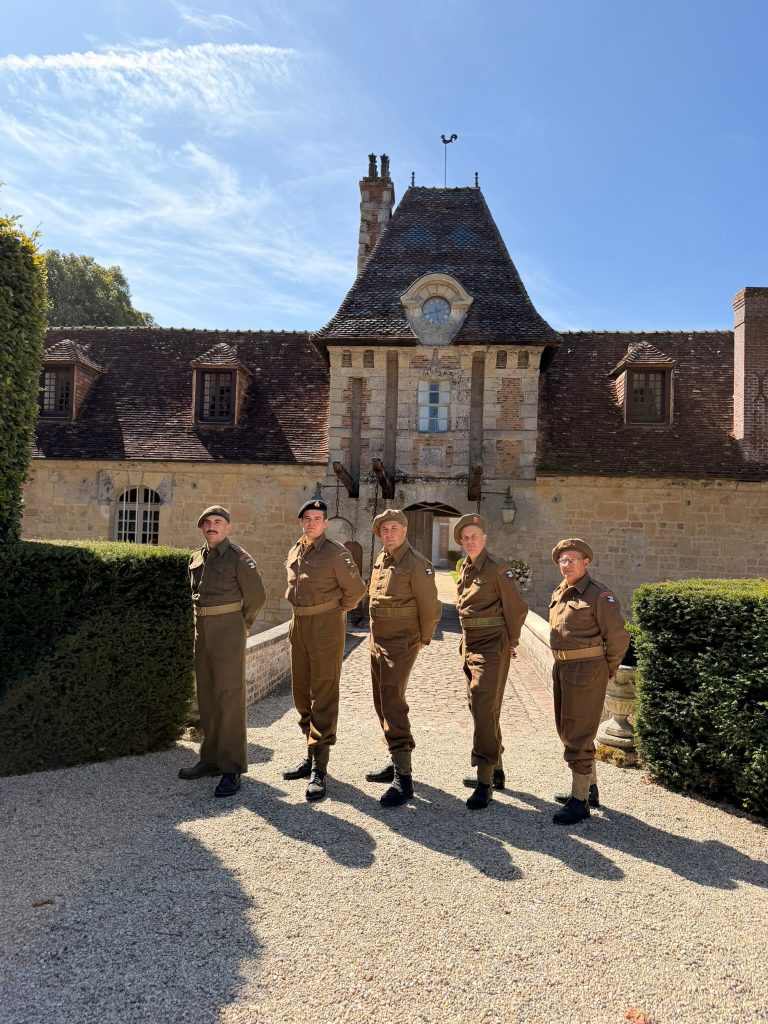
During the Second World War, Boutemont experienced German occupation and served as the temporary headquarters of Field Marshal von Rundstedt. It was liberated by British forces in August 1944.

Armand and Hélène Sarfati subsequently stewarded Boutemont for 44 years, expanding the property and reuniting it with the feudal motte as well as the expansive southern meadows. Thanks to their numerous garden creations, Boutemont earned the prestigious “Jardin Remarquable” distinction.

The current owners are passionate custodians of art, heritage, and gardens, to which they have dedicated their entire careers. They meticulously restored the château and its grounds, designed new flower gardens, and introduced modern visitor facilities. A dedicated team of twenty staff members (including four gardeners) welcomes visitors throughout the season. 42,000 visitors were welcomed in 2026.

Boutemont and the Normandy Landings – June 1944

During the Second World War, Field Marshal von Rundstedt established his headquarters at the château prior to the Normandy Landings. Following D-Day, Boutemont was liberated on August 22, 1944, by the British Hallamshire Battalion under the command of Lieutenant Colonel Hart-Dyke, who crossed the Touques River before the château under the protection of a smoke screen and German machine-gun fire from the heights. The German field hospital on the estate was subsequently taken over by British forces.

Historic Château Interiors Open to Visitors

The Postern Gate

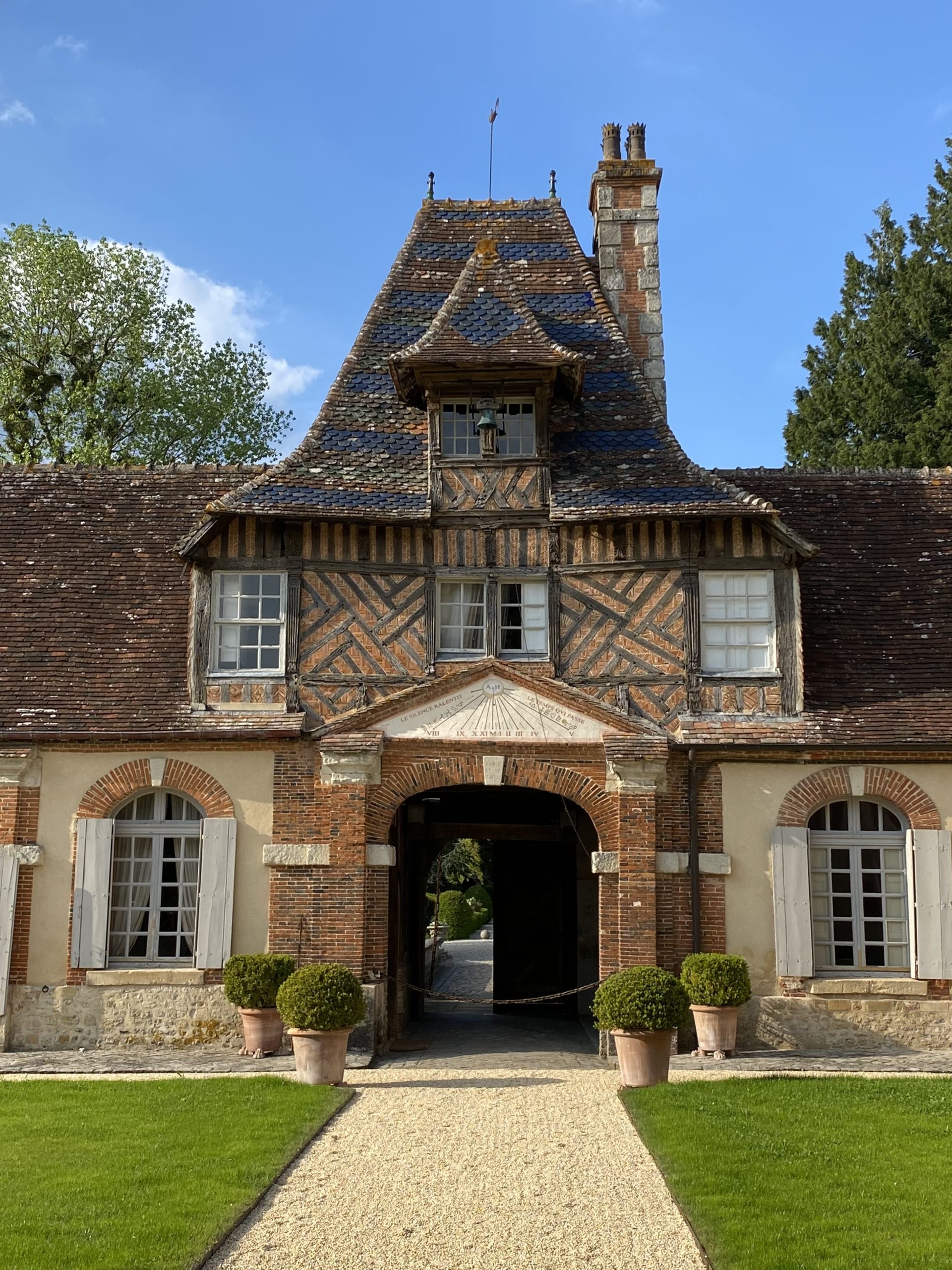
The château entrance faces north. It consists of an imposing postern gatehouse that replaced the original breach in the curtain wall, showcasing classic hallmarks of the Henry IV period. Its foundation, rising directly from the moats, is crafted from dressed ashlar stone, while the upper level features brickwork framed by stone quoins.

This postern retains both of its working drawbridges: a broad carriage gate and a narrower pedestrian gate.

Please note: as the château remains a private residence, only the three historic reception rooms and the chapel are open to visitors.

open to visitors

The Three Historic Rooms

The Gothic Salon

The Gothic Salon

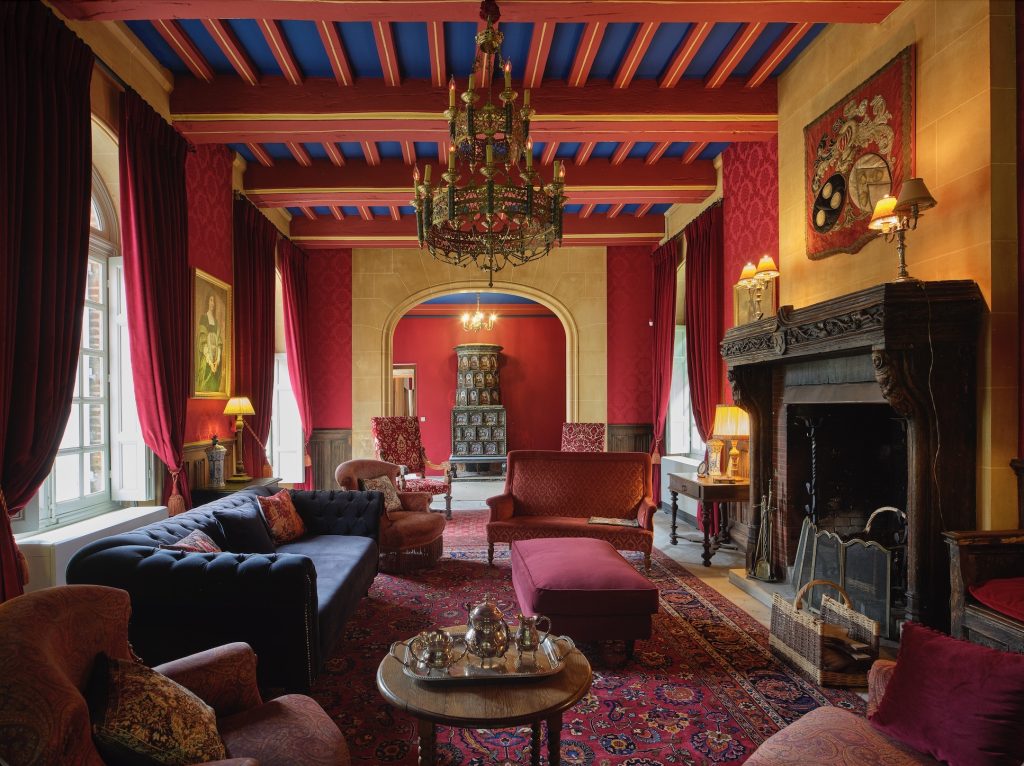
At the entrance to the salon stands a magnificent 18th-century German stove featuring painted ceramic tiles.

Beside it hangs a tapestry depicting Emperor Charles V on a falcon hunt after Bernard van Orley. The central room displays antique stained-glass windows, a Gothic chandelier, an imposing fireplace, and Renaissance carved oak furnishings featuring linenfold panelling ("plis de serviette").

Above the mantelpiece are the coats of arms of Boutemont ("sable, three roundels argent") and Villers de Boutemont ("azure, a chevron argent between three acorns vert").

The Lodge

The Lodge

In recent times, this room served as a music salon and billiards room. Featuring stalls reminiscent of English Masonic lodges, it is thought to have hosted esoteric gatherings, which were favored among the enlightened Norman nobility influenced by English society.

At the rear, fine ceramics with Masonic emblems are displayed, while the mantelpiece holds a Grand Master's ceremonial Masonic sword, a Templar sword, and two Knights Templar helmets.

Adorning the walls are banners of the great chivalric orders—Knights Hospitaller, Order of Calatrava, Teutonic Knights, and Knights Templar—along with banners of prominent medieval lords.

The Historical Gallery

The Historical Gallery

The gallery chronicles the major milestones in the history of Château de Boutemont, from the Middle Ages to the 20th century.

It highlights the departure of the Lord of Boutemont for the First Crusade alongside Robert Curthose, son of William the Conqueror. It also covers the era of Philippe Paisant under King Francis I, leading to the last lords of Boutemont prior to the French Revolution. Visitors can admire original landscape blueprints by Achille Duchêne, who redesigned the gardens in the early 20th century for Monsieur and Madame Drouilly, then owners of the estate.

Lastly, the gallery showcases Second World War artifacts uncovered on the property, commemorating Boutemont's liberation by British forces in August 1944.

The Chapel

Built in 1880 in Neo-Gothic style, the chapel pays tribute to the destroyed parish church of Boutemont. Pauline Bouteiller, the châtelaine of Boutemont at the time, was its founder and rests within. A bell from the former church, cast by Jean Aubert and dated 1653, can now be found in the parish church of Ouilly-le-Vicomte.

The chapel is dedicated to Saint Leobinus (Saint Lubin), Bishop of Chartres, who according to legend saved Paris from fire in the 6th century with the sign of the cross. Saint Lubin is also celebrated as a renowned miracle-worker during the reign of Childebert I, son of Clovis, King of the Franks.

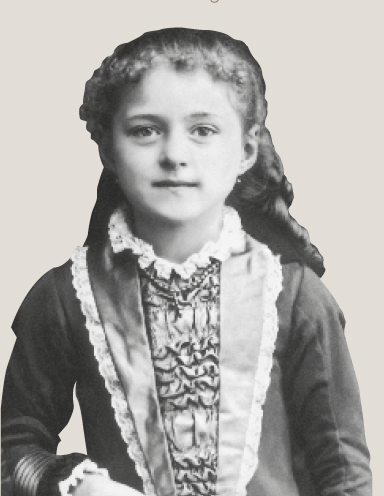
SAINT THÉRÈSE OF LISIEUX

Long before she was revered and prayed to across the globe, Saint Thérèse of the Child Jesus, then known as Thérèse Martin, cherished the simple beauty of the Normandy countryside and walks with her dog Tom around Lisieux.
In 1887, at age fourteen, she sketched the picturesque church of Ouilly-le-Vicomte in her notebook. She also accompanied her father, Louis Martin, on fishing excursions along the Paquine River, where it converges with the Touques in front of Château de Boutemont, whose chapel dates from 1880.

“I would try to fish with my little rod, but I preferred to sit by myself on the flowering grass; I listened to the whisper of the wind,” wrote the young woman who entered the Carmel of Lisieux at fifteen, died at twenty-four, and would become a universally beloved saint 28 years later.

THE MEDITATION LABYRINTH

A meditation labyrinth is unicursal—featuring a single path where one cannot get lost, gently guiding the walker toward a symbolic center. Oriented toward the east, it draws upon a millennium-old tradition spanning from Scandinavia to Chartres Cathedral. Along the winding path, sixteen letters are subtly engraved: by discovering them one by one, children can spell out the name of the grand spiral constellation that shines above the estate in September.

surface area

300 m2

path length

~290 m

A TIME-HONORED HISTORY

Over 3,500 years ago, spiral labyrinths emerged across Scandinavia, Siberia, Crete, India, and indigenous cultures of the Americas. Independent of one another, diverse civilizations created the very same sacred emblem: a single winding path leading to the center. These designs served in sacred rituals connecting humanity with the cosmos.

In the Middle Ages, the Christian Church incorporated these labyrinths onto cathedral floors for ritual Easter processions and symbolic journeys of redemption. Many were later destroyed over time; the most renowned example survives today in Chartres Cathedral (c. 1200).

From the 17th century onward, maze labyrinths created for entertainment appeared—complex puzzle hedge mazes and corn mazes where visitors are meant to lose their way.

Today, traditional unicursal labyrinths dedicated to contemplative meditation remain widely embraced in Anglo-Saxon and Nordic cultures. Exceptionally rare in continental Europe, the meditation labyrinth in the gardens of Boutemont is unique in France.

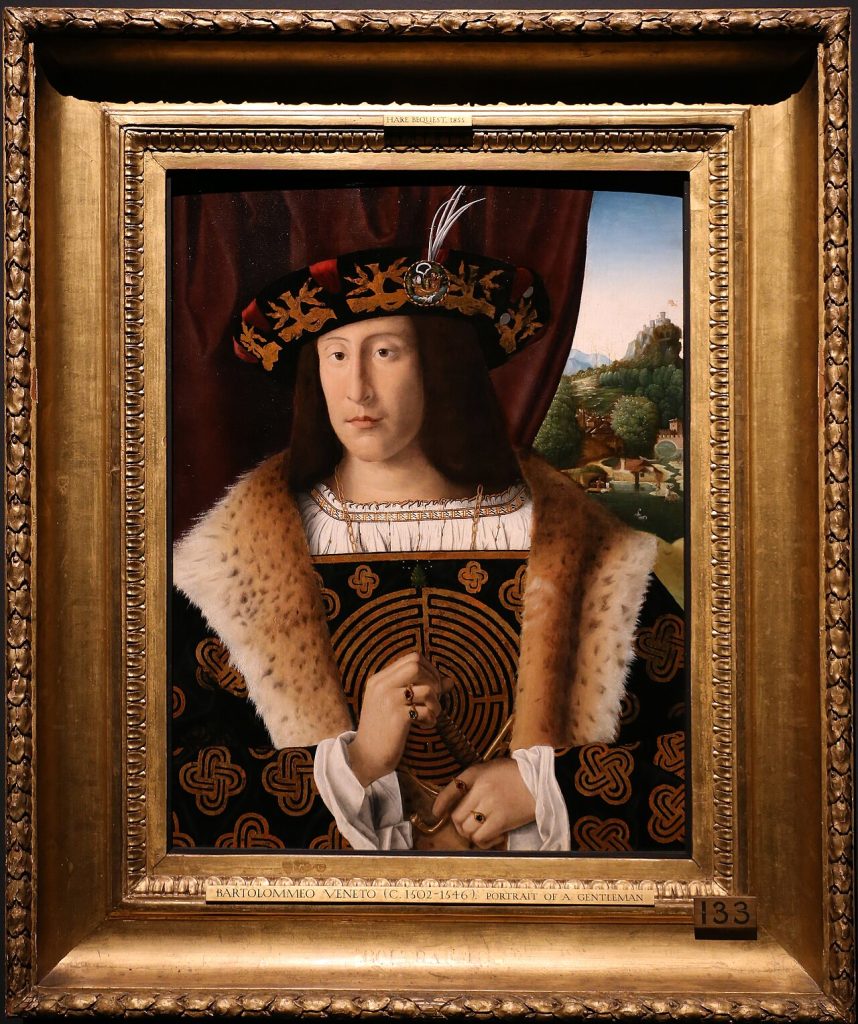
painting by Bartolomeo Veneto

Bartolomeo Veneto, Portrait of a Gentleman with a Labyrinth, c. 1540.

This Renaissance portrait is contemporary with the reconstruction of Château de Boutemont (1538).
It portrays a nobleman holding a labyrinth over his heart, symbolizing an inner journey toward spiritual knowledge and wisdom. This painting inspired our garden labyrinth.

The Feudal Motte

This earthwork motte, raised around the year 1000, was originally crowned by a wooden keep, allowing the Lord of Boutemont to monitor river traffic on the coastal Touques River as well as the ancient Roman road. The commanding elevation provided sweeping vistas over the surrounding countryside while remaining sufficiently elevated to escape winter river floods.

Boutemont was then a prominent fiefdom stretching to the sea, held by a knight under the Barony of Fauguernon. It was right beside the motte that the lord built the first fortified dwelling, marking the dawn of the château’s history.

The feudal motte of Château de Boutemont

The Roman Road

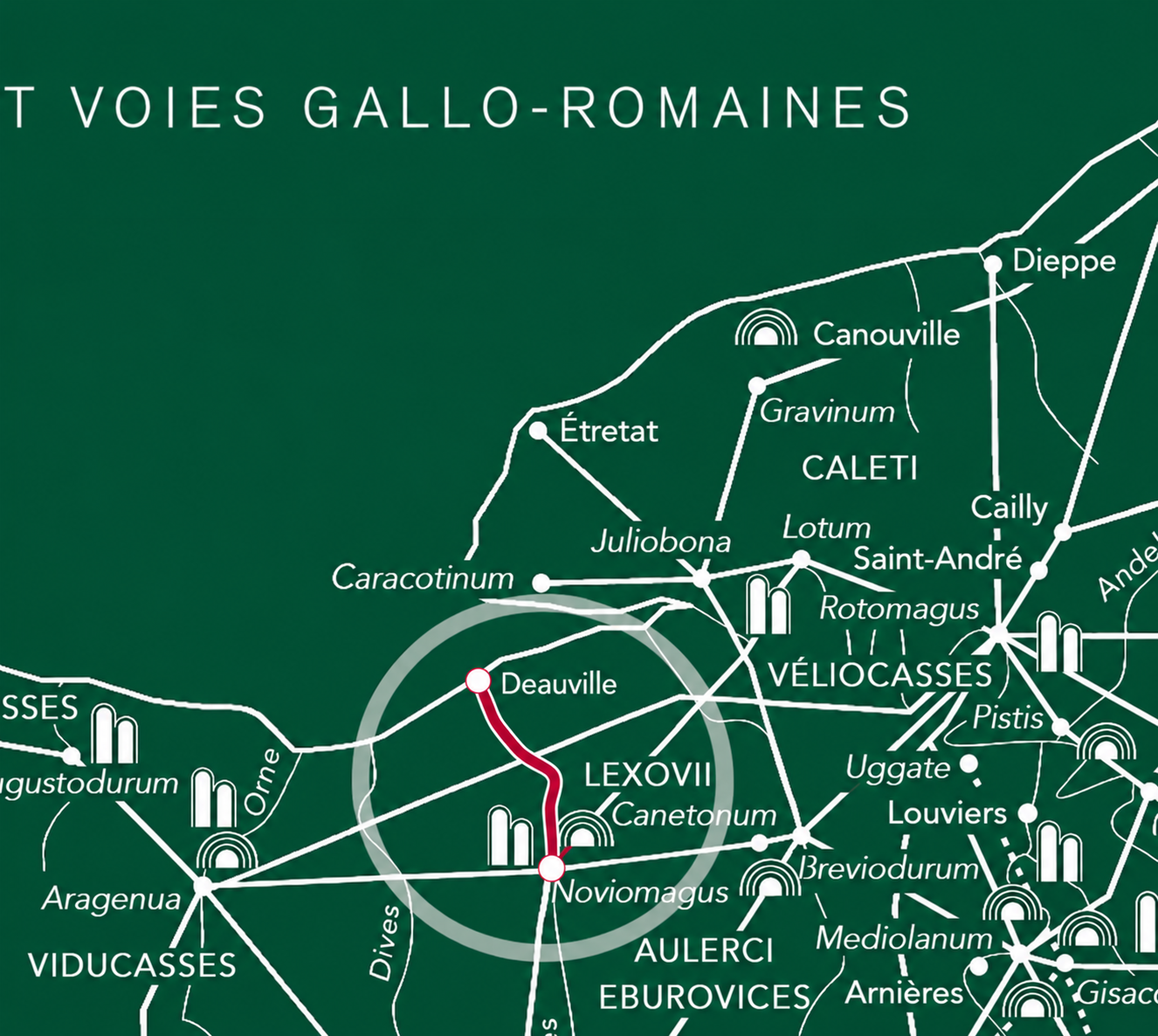
The château stands alongside the ancient Roman road that once connected Lisieux (Noviomagus Lexoviorum) to the Port of Touques and the sea.

Traces of this historic thoroughfare are still discernible today along the hillside behind the château.

The feudal motte of Boutemont was built directly along this ancient route.

CHILDREN'S KINGDOM!

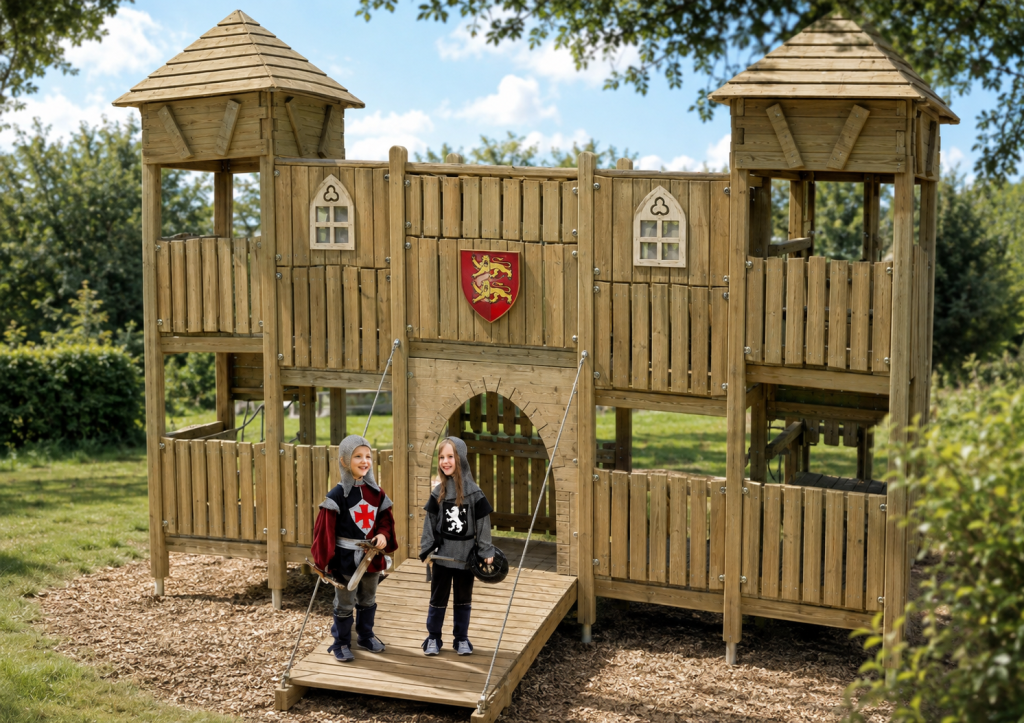
At Boutemont, the gardens offer children aged 3 to 12 a wonderful world of discovery, where they can explore, solve riddles, dream, and play. A large playground featuring a fortress inspired by medieval castles invites them to climb, explore, and invent their own adventures.

THE CHILDREN'S CASTLE – PLAY AREA

THE CHILDREN'S CASTLE – PLAY AREA

Adventure awaits in a spacious play area dominated by a fortress inspired by medieval castles. Children can climb, explore, storm the ramparts, and transform the towers into secret palaces or enchanted kingdoms through their imagination.
Ages 3 to 11. Adult supervision is required in the play area.

The Garden Elf's Activity Booklet

The Garden Elf's Activity Booklet

A fun, educational trail leads young explorers through the gardens. Riddles, scavenger hunts, and observation games turn their visit into a thrilling adventure. Ages 7 to 12.

The activity booklet is free and available in both French and English.

The Elf's Cabin

The Elf's Cabin

Tucked away in the heart of the garden, this whimsical cabin reveals a magical world filled with delightful details. Every touch sparks the imagination, inviting visitors of all ages to dream up tales of its mysterious resident.
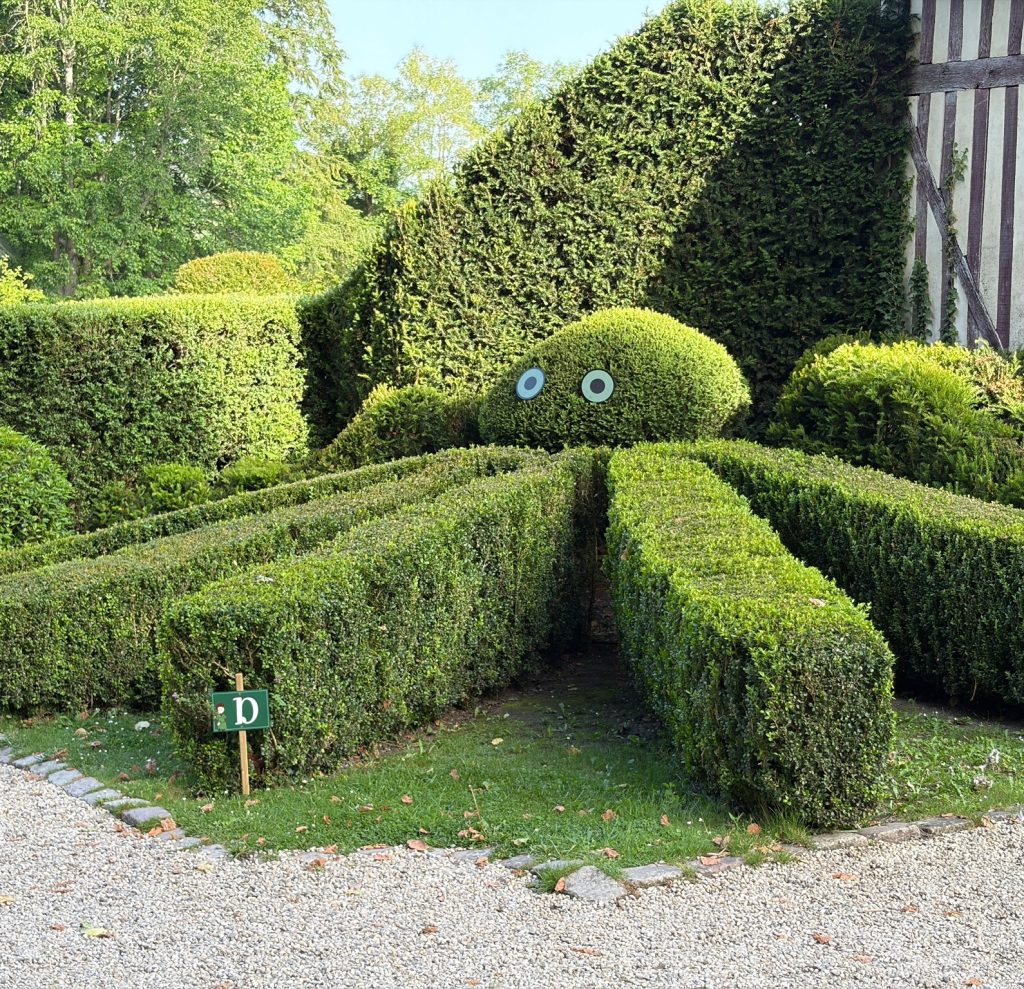
The Octopus Topiary

The Octopus Topiary

In the gardens of Château de Boutemont, children can hunt for an extraordinary octopus-shaped topiary.

With its playful, unexpected silhouette, it adds a touch of whimsical wonder to your walk and invites families to see garden art from a fresh perspective.

A delightful family discovery to enjoy along your stroll.
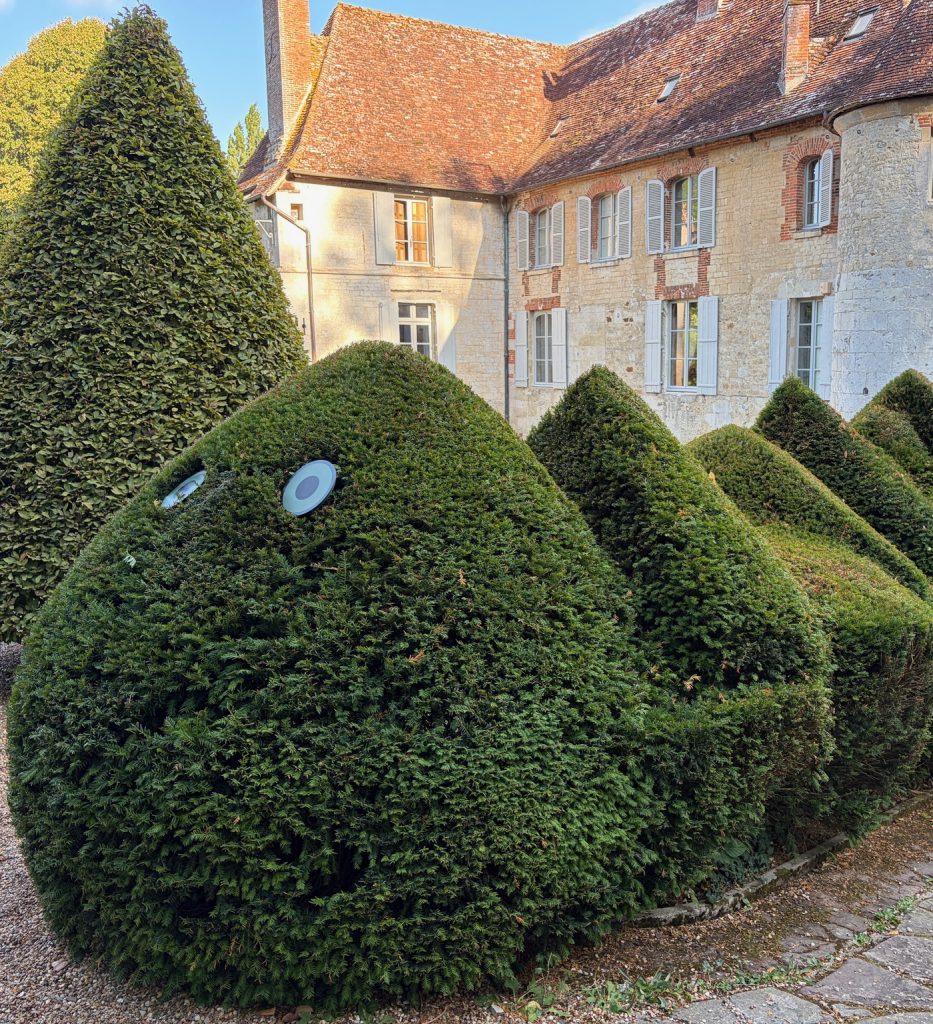
The Caterpillar Topiary

The Caterpillar Topiary

As you explore the grounds of Château de Boutemont, children can spot a charming caterpillar topiary.

Its fun, imaginative shape brings a smile to visitors of all ages and is a firm favorite with families.

A whimsical sight to watch out for throughout your walk.
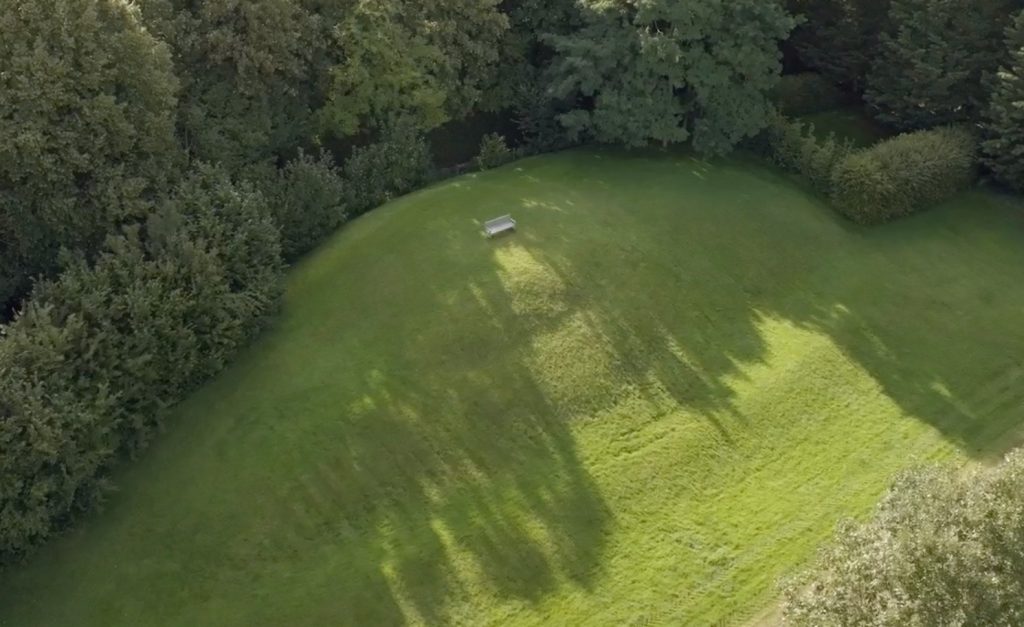
The Feudal Motte

The Feudal Motte

Children will love climbing this authentic earthen motte dating back to the year 1000.

The Koi Carp

The Koi Carp

Children can feed the large koi carp; fish food pellets are available at reception.
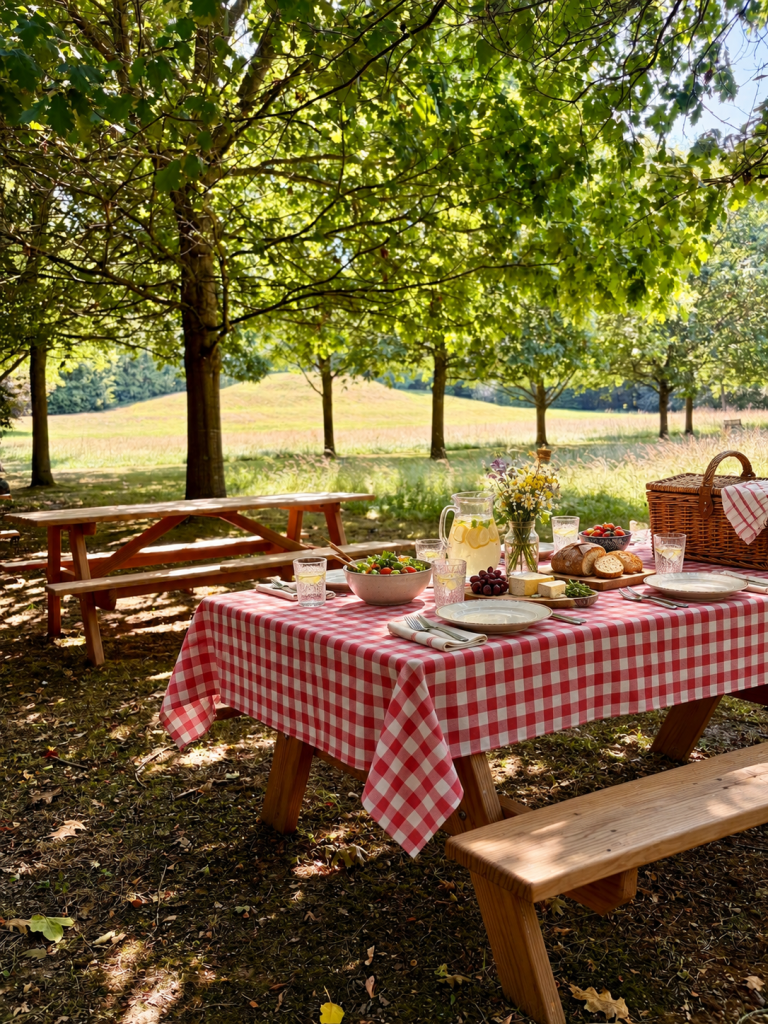
Picnic Tables

Picnic Tables

For a relaxing family break, nine picnic tables are available free of charge during opening hours: five in the flowering crabapple meadow and four at the foot of the feudal motte. They are freely accessible on a first-come, first-served basis without reservation. To protect the gardens, please picnic only at these designated tables.