


A living garden, to be observed closely
Nine hectares managed through sustainable ecology: natural meadows, hedges, trees, local wildlife, birds, and insects. Around the bend of a path, the estate reveals itself to those who take the time to look.
The estate in figures
Nine hectares, four gardeners
Gardens & architecture
- 100+
- topiaries
- 7
- historic buildings
- 120
- pots
Plant richness
- 150
- plant varieties
- 35
- types of shrubs
- 10
- gardens
- 40+
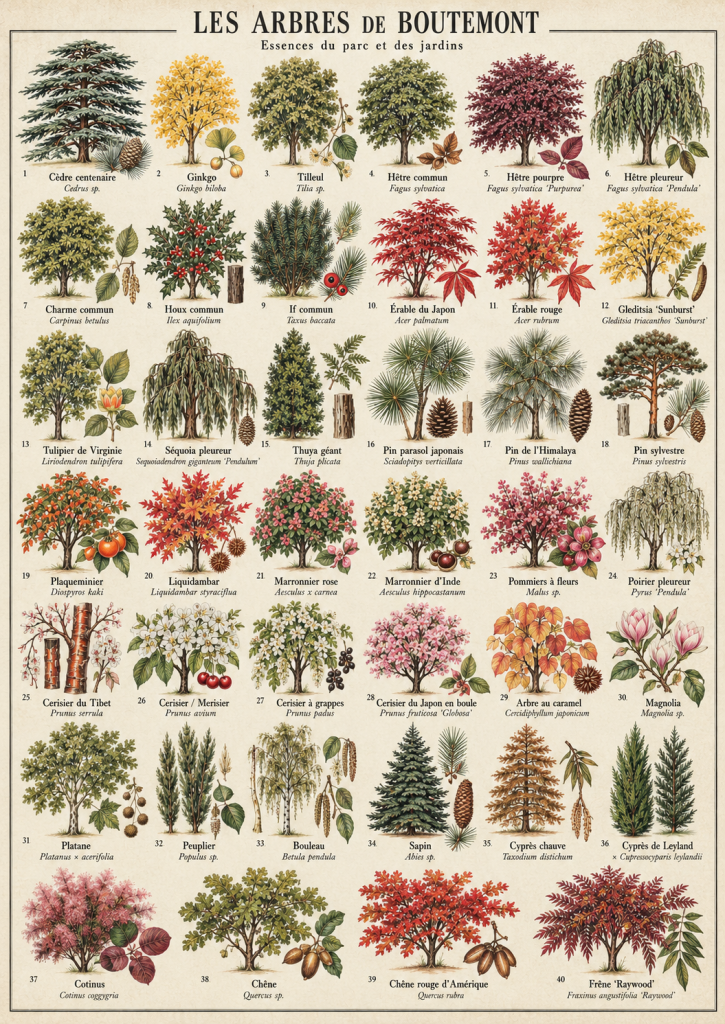
- tree species
The labyrinth
- 300 m²
- in surface area
- ~290 m
- of pathways
- 9
- circuits
Water & landscape
- 9 ha
- estate
- 4
- gardeners
- 500
- plants planted each year
Sustainable ecology
How we care for the estate
-
Zero pesticides
No pesticides are used on the estate: gardens, meadows, and lawns leave full space for wildlife.
-
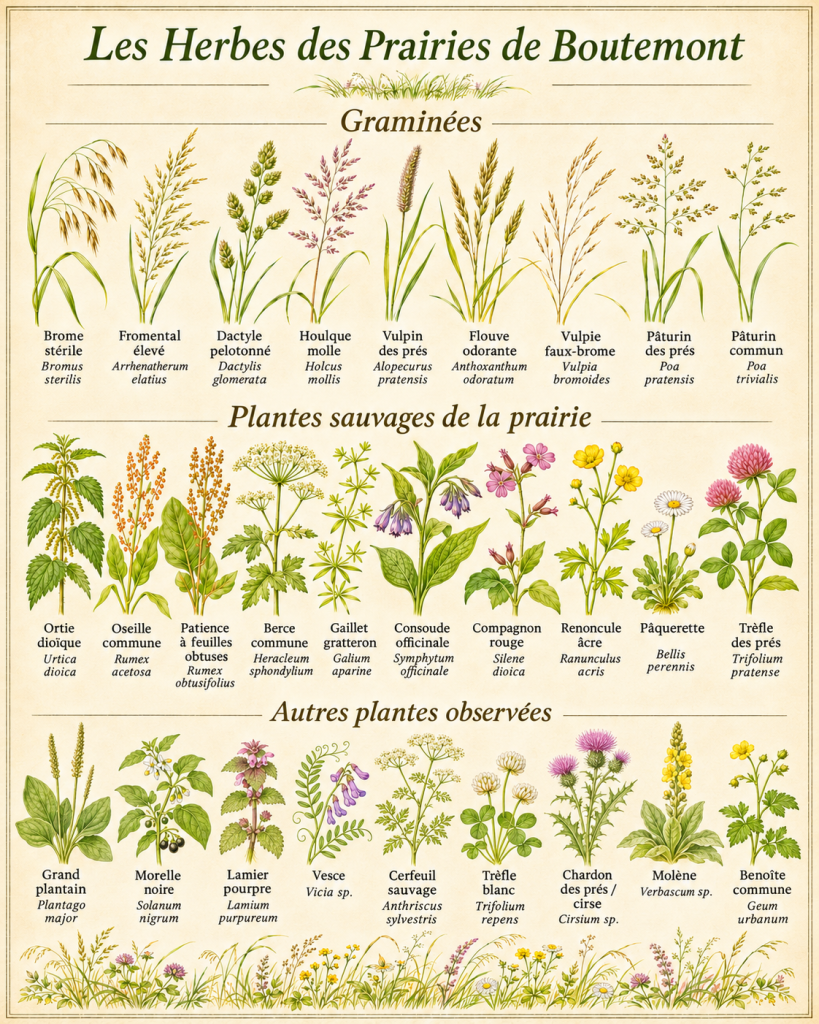
Natural meadows
Areas left as grass, acting as refuges for insects and small wildlife.
-
Hedges and trees
Shelter, food, and nesting sites for the birds of the estate.
-
The pond
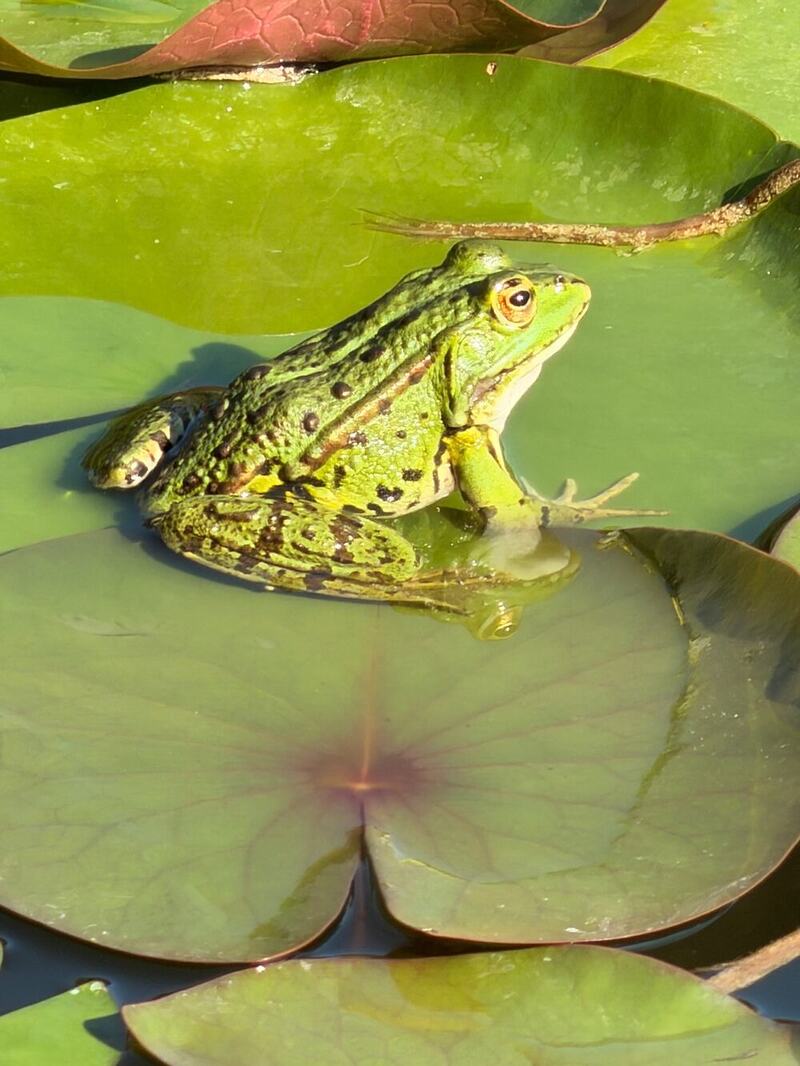
A calm environment where frogs, carp, and water lilies coexist, to be observed from its banks.
In the garden
Garden maintenance
Preservation of boxwoods
We regularly treat our boxwoods with a versatile organic acaricide insecticide, SPRUZIT® EC, against box tree moth caterpillars.
We pair this treatment with pheromone traps to best determine the treatment date.
This organic insecticide, in concentrated solution, is recognized for treating against defoliating caterpillars, box tree moth caterpillars, aphids, red spider mites, all types of scale insects, mites, leafhoppers, whiteflies, and wood-boring beetles. Highly effective, it is suitable for organic farming and naturally protects boxwoods and ornamental crops.
Watering of plants
Boutemont is located in a humid valley hollow. The flowerbeds are equipped with drip irrigation, which delivers water directly to the base of the plants while limiting waste.
We use rainwater, and water from the reflecting pool during the driest periods.
Who lives here?
The inhabitants of the estate
-
The pond
Green frogs
Perched on water lily leaves, they bask in the sun and dive at the slightest noise. Approach quietly.
-
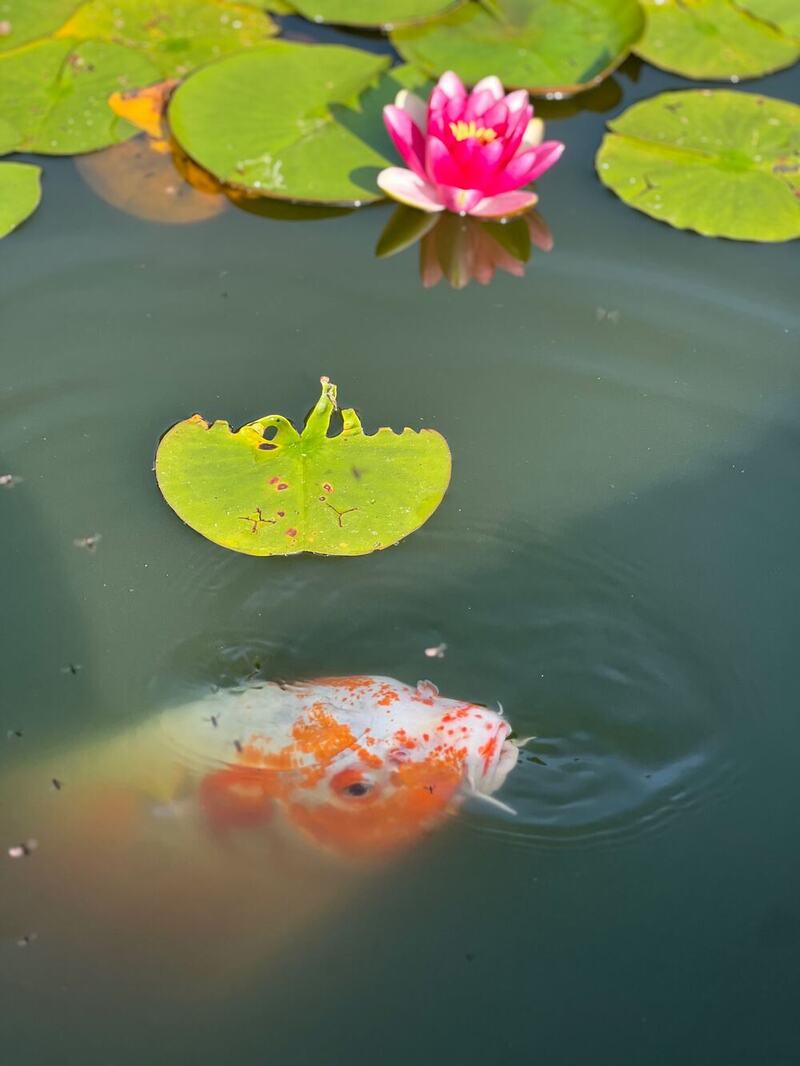
The pond
Koi carp and water lilies
Under the floating leaves and blooming water lilies, the koi carp slowly rise to the surface.
-
Meadows and hedges
Birds and insects
Hedges, trees, and natural meadows offer shelter and food to the birds and insects of the estate.
To be observed in September and October
Solitary ground-nesting bees
They almost never sting.
Those small mounds of fine earth, pierced by a clean hole, that you see in the lawns and along the moats are neither anthills nor wasp nests. They are the nests of solitary wild bees, peaceful and harmless insects that are among the best pollinators.
-
Almost no risk
The male has no stinger. The female only stings if handled or crushed.
-
Each her own nest
No queen, no workers, no swarm: each female digs and provisions her own nest.
-
From September to October
They appear as early as September, especially in the sun, and become more numerous in October.
-
An underground life
The offspring develop underground and reappear at the end of summer or the following autumn.
Why they almost never sting
Ground-nesting bees are solitary: they have no hive, no queen, and no collective reserves to defend. Males lack a stinger. Females have one, but use it only exceptionally, especially if they are caught or crushed. You can therefore walk nearby without any particular danger, provided you do not handle them.
Solitary, but numerous in the same place
Each female digs a gallery and prepares several cells within it. In each, she deposits a reserve of pollen mixed with nectar, lays an egg, and closes the cell. Dozens of holes side by side do not make a colony: the soil is simply loose, dry, well-drained, and well-exposed.
Precious pollinators in autumn
In mild and sunny weather, they visit the garden's late blooms, especially ivy, and carry pollen on the hairs of their legs and bodies. They thus participate in the fertilization of plants and the balance of the garden.
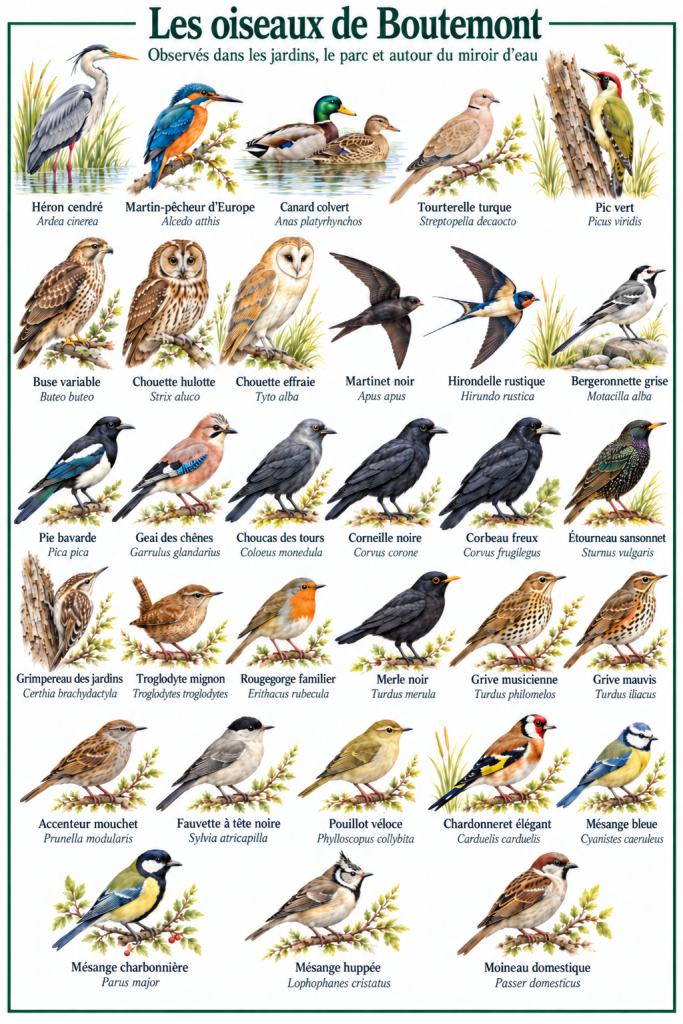
The birds of Boutemont
With its nine hectares of parkland and gardens, its centuries-old trees, its hedges, its meadows, and its moats, the Château de Boutemont offers a diversity of habitats favorable to many bird species.
Nearly 30 species have already been observed on the estate, some present year-round, others passing through with the seasons.
The large trees notably host woodpeckers, tits, treecreepers, and nuthatches. In the hedges and thickets, the robin, the Eurasian wren, and the common chiffchaff find shelter and food. The lawns and meadows attract blackbirds, thrushes, and starlings, while the reflecting pool is frequented by mallard ducks in spring, the grey heron, and, more occasionally, the common kingfisher.